

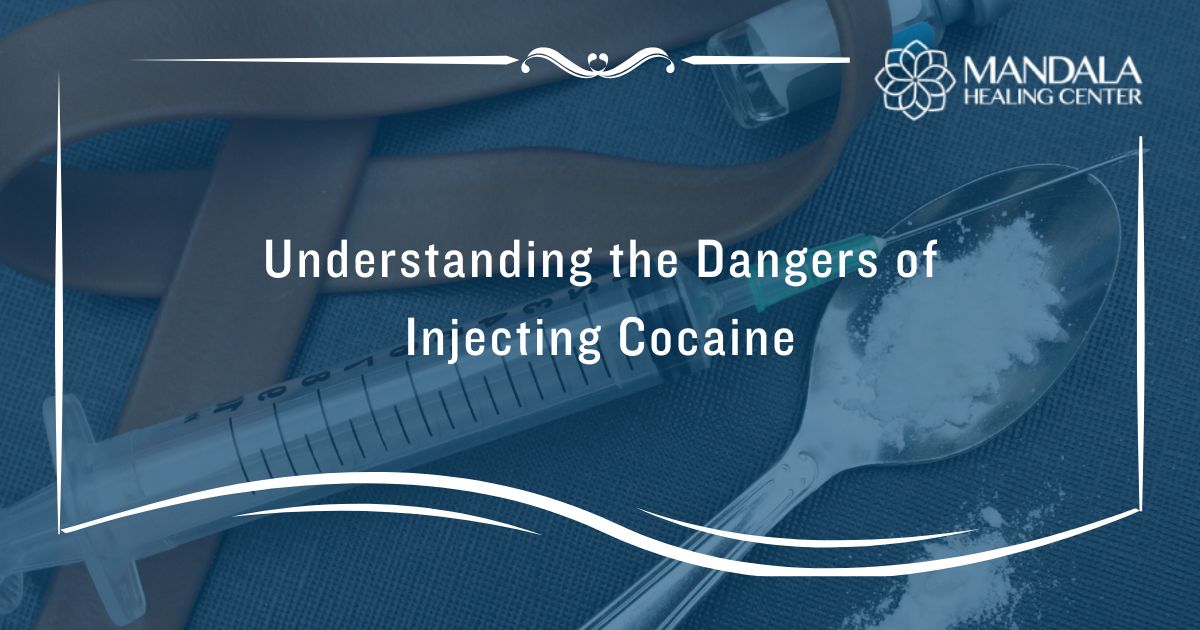
For individuals battling addiction, the search for a more powerful high can lead to more dangerous behaviors. One of the most serious methods of drug use is injecting cocaine. Often underestimated, intravenous cocaine use brings intense and immediate effects, but the risks far outweigh the short-lived high.
This article explores how injecting drugs like cocaine can lead to devastating consequences, including severe health complications, serious infections, and lasting damage to the central nervous system.
If you or someone you love is struggling with cocaine addiction or substance abuse, understanding these dangers is the first step toward treatment and recovery. Contact the specialists at the Mandala Healing Center to learn more about addiction, recovery, and available treatment options.
What Happens When You Inject Cocaine?
Cocaine is a powerful stimulant that affects the brain’s dopamine levels. Whether it’s white powder cocaine or crack cocaine, the drug floods the brain with dopamine, creating feelings of euphoria, confidence, and energy. While many people snort or smoke cocaine, some turn to cocaine injections to experience a faster and more intense high.
When injected directly into the bloodstream, cocaine bypasses the digestive system and takes effect within seconds. This route significantly increases the risks. The body experiences a rapid spike in heart rate, blood pressure, and blood flow, placing enormous strain on the central nervous system, heart, and other vital organs.
Short-Term Effects of Injecting Cocaine
The short-term effects of cocaine injection can feel exhilarating, but they come with immediate physical and psychological consequences. These may include:
- Chest pain and irregular heartbeat
- High blood pressure
- Extreme anxiety or paranoia
- Restlessness or agitation
- Seizures
- Aggressive behavior
- Temporary loss of control
The National Institute on Drug Abuse notes that these side effects often escalate with repeated cocaine use, particularly in those who inject the drug frequently or combine it with other substances like heroin (“speedballing”).
Long-Term Risks of Intravenous Cocaine Use
Over time, intravenous injection of cocaine leads to serious damage throughout the body. Because this method delivers the drug directly into the veins, repeated use can cause:
- Collapsed veins
- Chronic infections at injection sites
- Scarring and abscesses
- Hepatitis C and other infections from shared needles
- Increased risk of HIV
- Brain chemistry changes that affect mood, decision-making, and memory
When you inject cocaine, the dangers extend far beyond the high. This route is linked to life-threatening health issues that can appear after just a few uses. Medical researchers report that intravenous drug users face a significantly higher risk of overdose, suicidal thoughts, and mental health disorders.
Serious Infections and Diseases
One of the most alarming risks of cocaine injections is the development of serious infections. Reusing or sharing needles can introduce bacteria, viruses, and other pathogens directly into the bloodstream.
Common infections include:
- Hepatitis C
- HIV/AIDS
- Bacterial endocarditis (an infection of the heart lining)
- Skin infections like cellulitis or abscesses
- Bloodborne illnesses
Once bacteria enter the body through injection sites, they can quickly spread to the heart, liver, and brain, causing serious health issues. These infections are not only painful and debilitating—they can be fatal without medical intervention.
The Psychological Toll of Cocaine Addiction
Cocaine’s impact on brain chemistry goes beyond dopamine. Repeated cocaine use changes how the brain responds to pleasure, stress, and reward. This contributes to substance use disorders and makes it extremely difficult for someone to stop using without professional help.
People addicted to cocaine may experience:
- Severe depression
- Anxiety or panic attacks
- Paranoia
- Suicidal thoughts
- Emotional numbness
- Inability to feel pleasure
The psychological effects often worsen during withdrawal symptoms, which can include fatigue, irritability, insomnia, and intense cravings. These symptoms are a sign of dependence and a key reason why treatment options are necessary for long-term recovery.
Dangers of Mixing Cocaine with Other Substances
Some individuals choose to mix cocaine with other substances like alcohol, opioids, or benzodiazepines. These combinations significantly increase the risk of overdose, coma, and death.
One common and particularly dangerous mix is combining cocaine with heroin—a practice known as “speedballing.” While the stimulant effects of cocaine may mask the depressant effects of heroin, this can lead to respiratory failure, cardiac arrest, and death.
No matter the combination, mixing drugs amplifies the harm to your body and increases the likelihood of long-term damage or fatal consequences.
Cocaine’s Impact on the Body
Prolonged cocaine use affects nearly every organ system. As a stimulant, cocaine forces the body into overdrive. It narrows blood vessels, increases heart rate, and puts intense pressure on the heart and brain.
Physical consequences of cocaine abuse may include:
- Chest pain and heart attacks
- Irregular heartbeat
- Gastrointestinal issues
- Kidney damage
- Breathing difficulties (especially with smoked cocaine)
- Chronic fatigue
- Cognitive impairments
Even people who start by snorting cocaine or smoking it often progress to injecting as their tolerance builds. This leads to faster highs but also to more intense health declines.
The Role of Drug Dealers and Street Cocaine
Illicit cocaine is rarely pure. Most street cocaine is cut with other substances like baking soda, talcum powder, or even harmful chemicals. These contaminants can trigger allergic reactions, respiratory failure, and serious health issues.
When people inject these tainted substances, the risk increases exponentially. Drug dealers are not concerned with user safety, and people who inject are often unaware of what they’re truly putting into their veins.
How to Know If You Need Help
If you or someone you care about is addicted to cocaine, it’s important to recognize the signs and seek professional help.
Warning signs may include:
- Constant cravings or obsession with getting high
- Failed attempts to stop using
- Neglecting responsibilities or relationships
- Using despite knowing the harm
- Risky behaviors like injecting drugs
Self-assessment can be a helpful first step, but talking to a counselor, doctor, or addiction specialist is the most reliable way to determine the right treatment options.
Treatment and Recovery: There Is Hope
Cocaine addiction is treatable. No matter how long you’ve struggled, help is available. People may seek inpatient or outpatient treatment, depending on their needs.
Comprehensive treatment plans typically include:
- Medically supervised detox
- Therapy (individual, group, family)
- Behavioral interventions like CBT
- Support groups and peer counseling
- Medication to manage symptoms
- Aftercare and relapse prevention
Facilities specializing in substance abuse recovery understand the unique challenges of intravenous cocaine use. They offer judgment-free support, evidence-based care, and personalized strategies for healing.
Remember, recovery is not about shame—it’s about reclaiming your life. Seek treatment as soon as you recognize the signs of addiction.
Find Treatment and Support Now
The dangers of injecting cocaine are real, and they are severe. From serious infections and collapsed veins to overdose, mental health disorders, and long-term health complications, the risks of this method of drug use cannot be overstated.
But there is always a path forward. If you or someone you love is struggling with substance use, don’t wait. Reach out for professional help at our cocaine addiction treatment center today. Healing is possible, and you don’t have to walk the road alone.
If you need help or want to explore your options, contact the Mandala Healing Center specialists. Learn about our programs, find resources, or discover reliable recovery support by reaching out today.
Frequently Asked Questions (FAQ) About Intravenous Cocaine Use
1. Why do some people switch from snorting or smoking cocaine to injecting it?
People often switch to injecting cocaine to experience a faster, more intense high. Over time, as tolerance builds, snorting or smoking may not produce the same euphoric effects. Injection delivers the drug directly into the bloodstream, which can amplify its effects—but it also dramatically increases health risks and the potential for addiction.
2. Can injecting cocaine one time cause permanent damage?
Yes. Even a single intravenous injection of cocaine can result in serious consequences. Immediate risks include heart attack, stroke, seizures, allergic reactions, and serious infections from contaminated needles. Some damage, like to the heart, veins, or brain, can be irreversible, especially if emergency care is not received in time.
3. How does cocaine use affect mental health over time?
Chronic cocaine use is closely linked to mental health disorders such as depression, anxiety, paranoia, and psychosis. These conditions often worsen with long-term use and can persist even after someone stops using. In some cases, cocaine-induced mental health symptoms may require ongoing psychiatric care.
4. What should I do if someone is experiencing a cocaine overdose?
Call emergency services immediately. While waiting for help, try to keep the person calm and lying on their side to prevent choking if they vomit. Do not leave them alone. Symptoms of overdose can include chest pain, confusion, seizures, irregular heartbeat, difficulty breathing, and loss of consciousness. A cocaine overdose is a medical emergency.
5. Is it possible to recover from cocaine addiction without rehab?
While some people may attempt to quit on their own, recovery without professional treatment can be extremely difficult, especially for those with severe dependence or a history of injecting drugs. Rehab provides medical supervision, therapy, and structure that significantly increase the chances of long-term sobriety and recovery.
6. Are there medications that help with cocaine addiction?
There are currently no FDA-approved medications specifically for cocaine addiction, but some medications may help reduce cravings or treat co-occurring disorders like depression or anxiety. Research is ongoing, and treatment options continue to evolve. Behavioral therapies remain the most effective evidence-based approach at this time.
Sources




-

How Long Does Buprenorphine Stay in Your System?
May 19, 2026
-
How Much Does a Detox Program in West Palm Beach Cost?
April 28, 2026
-
How Long Do South Florida Rehab Programs Typically Last?
April 21, 2026
-
What Does Freebasing Mean?
April 13, 2026
-
How to Get Florida Medicaid to Pay for Drug & Alcohol Rehab Services
April 10, 2026