

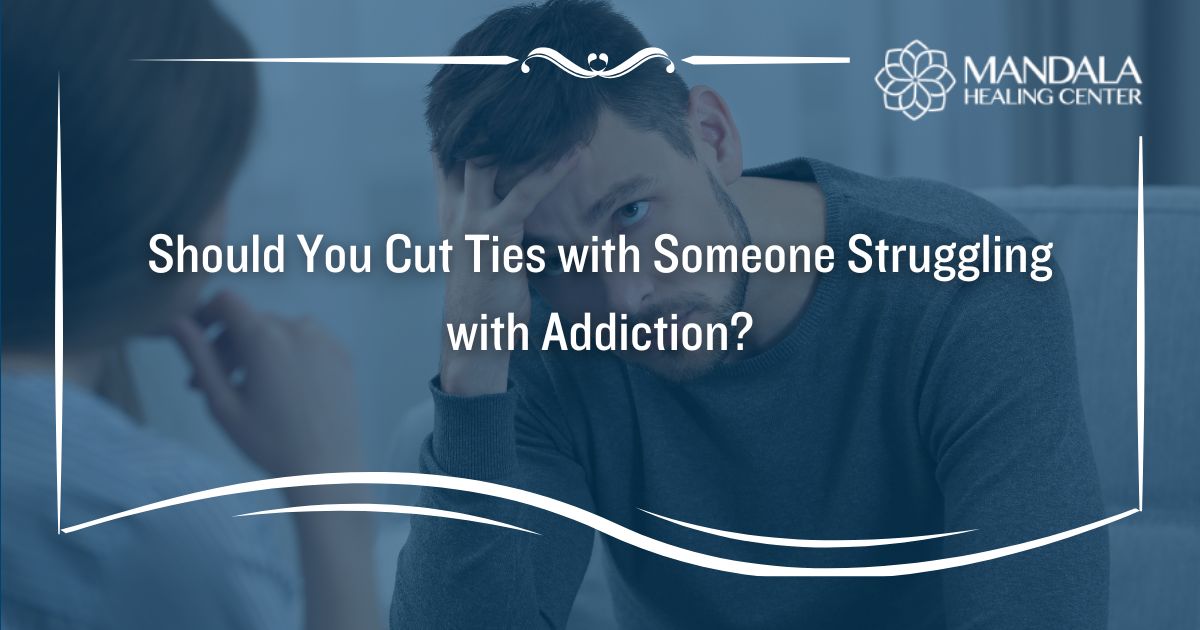
Deciding whether or not to cut ties with someone struggling with addiction is one of the most painful and complicated choices a person can face. It’s not just a question of loyalty or love, it’s a decision wrapped in grief, frustration, fear, and often deep guilt.
When someone you care about is caught in the grip of addiction, their behavior can become unpredictable, hurtful, and even dangerous. Even so, the emotional bond remains.
Addiction is never an isolated issue. It doesn’t just affect the person using drugs or alcohol, it sends shockwaves through families, friendships, marriages, and communities. It can erode trust, create chaos, and leave loved ones emotionally drained.
Over time, being close to someone in active addiction can begin to take a serious toll on your well-being.
So, where do you draw the line? Should you cut ties with someone struggling with addiction? Is there a way to protect yourself while still holding onto hope for their recovery and offering a level of emotional support?
At Mandala Healing Center, we understand the unique challenges that families and loved ones face when navigating a relationship with someone who is battling addiction.
This guide explores when cutting ties might be necessary, what that decision could look like, and how to care for your mental and emotional health, no matter what path you choose.
The Impact of Addiction on Relationships
Drug or alcohol addiction doesn’t happen in a vacuum. When someone is struggling with substance use, their behavior and mental health often change in ways that ripple outward, affecting everyone close to them.
Partners, parents, children, and friends are frequently caught in the emotional storm, trying to offer support while enduring pain themselves.
Over time, this can become so overwhelming that some begin to consider cutting ties with an addict, not because they’ve stopped caring, but because they can no longer carry the weight of the relationship alone.
The Emotional Toll of a Substance Use Disorder
Living with or loving someone in active addiction is emotionally exhausting. You may constantly feel anxious, walking on eggshells to avoid triggering a reaction.
Broken promises, lies, and secretive behavior can betray trust. Fear often becomes a daily companion, fear for their safety, your safety, and what the next day may bring.
The unpredictability of addiction means routines break down, communication deteriorates, and emotional intimacy becomes harder to maintain.
Financial and Practical Strain of Substance Abuse
Addiction also has a real-world impact on finances. Money may disappear, bills go unpaid, and possessions might be sold.
You may find yourself repeatedly covering rent, legal fees, or rehab costs, hoping that this time, things will be different. Over time, manipulation and broken trust often become patterns, leaving loved ones feeling used and helpless.
Family Dynamics Shift
In families, addiction often reshapes roles and responsibilities. Children may begin to take on adult duties. Spouses or partners may feel abandoned, carrying the emotional and practical weight of the household.
Parents may feel torn between love and fear, unsure how to help without enabling.
The presence of addiction often pulls family members into a survival mode where emotional connection and security take a backseat to crisis management.
Why People Consider Cutting Ties
After enduring years of instability, chaos, and heartbreak stemming from alcohol or drug addiction, many begin to question how much more they can take. It’s not uncommon to hear, “I love them, but I can’t do this anymore.”
For some, cutting ties with an addict becomes a way to protect their own health, regain a sense of peace, and stop the cycle of enabling.
While ending a relationship may feel drastic, it can sometimes be an act of survival, and an important step in reclaiming your life.
Why Cutting Ties Is So Hard
Even when a relationship has become harmful or unsustainable, the idea of cutting ties with someone struggling with addiction can feel impossible. That’s because this decision isn’t just practical, it’s deeply emotional, layered with personal history, complex feelings, and societal expectations.
The Power of Emotional Bonds
You may have shared years, sometimes a lifetime, with this person. They might be a sibling, a spouse, a parent, or a lifelong friend. These emotional bonds don’t disappear just because someone is in active addiction.
The person you love is still in there somewhere, and separating from them can feel like losing part of yourself. That emotional connection often keeps people holding on, even when the relationship becomes painful.
Guilt, Shame, and Responsibility
Many people feel intense guilt or shame for even thinking about walking away. You may ask yourself, “What if I’m the only one they have left?” or “If I leave, will they spiral even further?”
This sense of responsibility can be overwhelming, especially for parents or spouses who feel it’s their duty to protect and help.
The Hope That Things Will Change
Hope can be both beautiful and heartbreaking. Many hold on because they believe recovery is possible, and it is. That said, addiction often brings cycles of relapse, broken promises, and temporary improvements followed by setbacks.
Letting go can feel like giving up on someone’s potential or abandoning them at their lowest point.
Societal and Cultural Pressure
We’re often taught that “family sticks together” and that real love means staying no matter what.
This mindset can make people feel ashamed for needing distance, even when that distance is essential for their well-being. The truth is, walking away doesn’t mean you don’t care, it often means you’ve reached your limit.
Recognizing why cutting ties is so difficult doesn’t make the decision easier, but it helps you see that struggling with this choice is normal and that you’re not alone in feeling conflicted.
When Maintaining the Relationship Becomes Harmful
Loving someone who struggles with addiction can feel like a balancing act between compassion and survival. While many people do everything they can to stay connected and supportive, there comes a point when the relationship itself can become harmful.
In these cases with unhealthy relationships, cutting ties with an addict may not be an act of cruelty, it may be an act of self-preservation.
Codependency and Enabling Behaviors
When you’re deeply involved in someone’s addiction, it’s easy to slide into patterns of codependency, where your emotional well-being becomes dependent on their choices.
You might constantly worry about the needs of the alcohol or drug addict while ignoring your own, or go out of your way to “fix” things for them.
Over time, this dynamic can evolve into enabling, where your attempts to help actually shield them from consequences. Covering for them, giving money, or making excuses may feel like love, but it often delays their opportunity to confront the reality of their addiction.
When Your Health and Safety Are at Risk
If your mental or physical health is suffering because of the relationship, that’s a clear red flag.
Constant anxiety, sleep loss, depression, problems with self-esteem or physical illness can stem from the chronic stress of dealing with a loved one’s addiction.
If there’s any threat of physical abuse, destruction of property, or reckless behavior putting others at risk, it’s not only okay, it’s necessary to create distance.
Repeated Boundary Violations
Healthy relationships, even difficult ones, require respect for boundaries.
If you’ve set clear expectations, such as no alcohol abuse or drug use in the home, or no contact while intoxicated, and those boundaries are repeatedly ignored, it may be time to reconsider the relationship.
Promises broken again and again, manipulative or negative behavior, or emotional outbursts followed by apologies that lead nowhere are signs that your boundaries aren’t being honored.
Abuse, Manipulation, and Relapse Cycles
It’s important to be honest about what you’re experiencing. Verbal abuse, gaslighting, emotional blackmail (“If you leave, I’ll hurt myself”), or repeated relapses without accountability can be signs that the relationship is more damaging than supportive.
In these situations, cutting ties with an addict isn’t about giving up, it’s about protecting your own life, health, and future.
It Doesn’t Always Mean Forever
Choosing to walk away doesn’t have to be permanent. Sometimes, space is what both people need to heal. You can still love someone and choose to protect yourself.
In fact, stepping back may be the most loving thing you can do if it helps them finally face the reality of their addiction.
When staying in the relationship harms you more than it helps them, it’s okay to step away. Your safety and sanity matter just as much as theirs.
Setting Clear Boundaries vs. Cutting Ties: What’s the Difference?
It’s easy to confuse setting boundaries with cutting someone off entirely, but there’s a key difference.
Boundaries are about protecting your well-being while maintaining a relationship, whereas cutting ties is a more extreme step often taken when boundaries have been repeatedly violated.
For those supporting someone with substance use issues, learning the difference is essential, and can be the first step in reclaiming your peace of mind.
What Do Healthy Boundaries Look Like?
Healthy boundaries clearly communicate what you will and won’t tolerate, without trying to control the other person. In the context of addiction, this might sound like:
- “You can’t be in my home if you’re under the influence.”
- “I won’t give you money, but I’m happy to help you find treatment.”
- “If you miss our scheduled time together while using, I will need to take a step back.”
These statements come from a place of self-respect, not punishment. They set clear expectations while still leaving the door open for connection, if and when the other person is willing to meet those terms.
When Boundaries Stop Working
Unfortunately, not everyone respects the boundaries you set. When someone continues to lie, steal, show up intoxicated, or manipulate your compassion, it’s a sign that boundaries alone may not be enough.
If enforcing boundaries leads to constant conflict, emotional distress, or danger, cutting contact may become the only safe, reasonable option.
Cutting Ties as a Boundary to Unhealthy Behaviors
It’s important to understand that deciding to cut ties with someone struggling with addiction doesn’t have to come from anger or resentment. In fact, it can be a powerful boundary that says: “I care about you, but I need to take care of myself too.”
Stepping away may be temporary or permanent, it depends on the situation, but it doesn’t have to be a door slammed shut in bitterness.
Sometimes, the most compassionate thing you can do is create distance. This space can provide clarity, break cycles of enabling, and even motivate your loved one to seek help. At the same time, it gives you the freedom to heal, reflect, and rebuild your stability.
How to Know It’s Time: Questions to Ask Yourself
Deciding to distance yourself from someone you care about is never easy, especially when that person is struggling with addiction. There are moments when the toll it’s taking on you becomes too heavy to carry.
If you’re unsure whether it’s time to step away, asking yourself a few honest questions can help clarify what’s best for your well-being.
1. Have I tried setting boundaries, and have they been respected?
If you’ve made it clear what behaviors you will and won’t tolerate, and those boundaries are repeatedly crossed, it may be a sign that the relationship is no longer healthy.
Boundaries are meant to protect mental and emotional space. If they’re ignored or manipulated, sustaining a balanced relationship becomes impossible.
2. Is my health or safety at risk?
Are you constantly anxious, losing sleep, dealing with panic attacks, or experiencing physical harm?
Addiction-related chaos can be traumatic. If being involved in this person’s life is putting your safety or stability at risk, it’s time to prioritize your own protection.
3. Am I enabling more than helping?
It’s common to confuse support with enabling. Ask yourself if your involvement is actually helping your loved one recover or shielding them from the consequences of their actions.
Sometimes, stepping back is the only way they can truly confront the seriousness of their addiction.
4. Am I emotionally exhausted, burnt out, or fearful all the time?
If your life feels like a constant state of crisis or dread, that’s not sustainable. Your emotions matter too.
Chronic stress, burnout, and emotional trauma are real risks in relationships impacted by addiction.
5. Am I seeking help for myself?
You don’t have to navigate this alone. Therapy, Al-Anon, or other support groups can help you process your experience, gain clarity, and receive guidance on whether cutting ties is the right step for you.
Remember, prioritizing your own healing is not selfish, it’s necessary.
What Cutting Ties Might Look Like in Practice
The idea of cutting ties with a person with an addiction can feel dramatic or extreme, but in reality, it doesn’t always mean a permanent or angry goodbye.
Sometimes, it’s a gradual and thoughtful shift meant to protect your own health and boundaries.
What that looks like in practice can vary from person to person, but the common thread is that it’s about safety and clarity, not punishment.
Creating Distance
Cutting ties might start with not answering phone calls or texts, especially if they’re manipulative, aggressive, or only come during moments of crisis.
You may choose to block communication temporarily, allowing yourself time to breathe and reset without being pulled into chaos.
Avoiding in-person contact or visits can also be necessary, particularly if past interactions have escalated into fights, emotional breakdowns, or unsafe behavior. You’re allowed to step away from environments that put your well-being at risk.
Communicating Boundaries (When Safe to Do So)
When possible and safe, some people find it helpful to communicate their decision clearly:
“I love you, but I can’t continue this relationship while you’re using. If you choose to seek help, I’ll be here to talk.”
This lets the person know the door isn’t necessarily closed forever, it’s simply not open under current circumstances.
Temporary vs. Permanent Disconnection
For some, cutting ties is temporary, a pause that allows healing to begin. For other family members or loved ones, especially when there’s repeated abuse or total disregard for boundaries, the disconnection may be long-term or permanent.
Either way, the goal isn’t revenge, it’s survival and peace.
Cutting ties with an addict isn’t about giving up on them. It’s about refusing to lose yourself in the process of loving someone who isn’t ready to get help.
You’re allowed to choose peace, even if it means choosing distance.
[elementor-template id=”173075″]
Guilt, Grief, and Letting Go
Walking away from someone you love, especially someone who’s struggling with addiction, can trigger a wave of emotions that feel hard to process. Whether the decision was made slowly over time or came after a final breaking point, guilt and grief often follow closely behind.
You may question yourself, your loyalty, or whether you did enough. It’s normal to feel like you’ve failed them, or that they’ve failed you.
You might swing between emotions: relief at finally having space to breathe, anger at all the broken promises, and deep sadness over what the relationship once was or could have been.
These feelings are not only valid, they’re expected. Loving someone with an addiction means holding space for love, pain, and disappointment all at once.
Letting go doesn’t mean you stopped caring. It means you cared enough to recognize your own limits.
Common Emotional Responses
- Guilt: “Did I give up too soon?”
- Shame: “What kind of person walks away from someone in pain?”
- Grief: Mourning the relationship, the person you once knew, or the future you hoped for
- Relief: Finally escaping the daily chaos, worry, or trauma
- Confusion: Feeling both peace and pain at once
Tips for Processing Guilt with Compassion
- Remind yourself why you made the decision, review the harm, the crossed boundaries, and your efforts to help.
- Talk to a therapist or support group (like Al-Anon or Nar-Anon) to work through complex emotions with people who understand.
- Accept that two truths can exist at once: you can love someone and still need distance.
- Write a letter you don’t send to release emotions, say what you need to say, and begin healing.
- Allow yourself time; guilt doesn’t disappear overnight, but it lessens when you consistently choose your own well-being.
Letting go is never easy, but you deserve peace, too.
When and How Reconnection Might Be Possible
Deciding to cut ties with someone struggling with addiction doesn’t always mean the relationship is permanently over. In some cases, with time, healing, and real change, reconnection becomes possible, but only when it’s safe, healthy, and mutual.
Signs of Real Progress in Recovery
Before considering reconnecting, it’s important to look for clear, consistent signs that the person is committed to recovery.
This may include:
- Involvement in a long-term treatment program or sober living
- Attending therapy or 12-step meetings regularly
- Demonstrating accountability, acknowledging past harm and making amends
- Respecting boundaries you previously set
Rebuilding trust isn’t about jumping back in like nothing happened. It’s about taking small, safe steps, maintaining healthy boundaries, and watching for sustained change, not just promises.
When Reconnection Is Not Safe or Healthy
Even if someone says they’ve changed, reconnecting isn’t always the right move. If there’s ongoing manipulation, blame-shifting, or a lack of real accountability, it may not be safe to re-enter the relationship.
Trust your instincts and give yourself permission to stay disconnected if your peace or safety would be at risk.
Recovery is a process, and reconnection, if it happens, should happen on your terms, not out of guilt or pressure.
How Mandala Healing Center Supports Families and Loved Ones
At Mandala Healing Center, we understand that cutting ties with a person with an addiction isn’t just a moment, it’s a process, filled with pain, reflection, and sometimes, healing.
That’s why we offer comprehensive support and professional help to individuals in recovery, their families and their loved ones.
We provide:
- Family therapy sessions to rebuild communication and trust
- Educational programs to help families understand addiction and healthy boundaries
- Support resources for navigating difficult decisions, including separation and reconnection
Addiction affects the entire family system, and everyone deserves a chance to heal and seek treatment. Whether you’ve stepped back from a loved one or you’re still in the thick of it, you don’t have to carry the weight alone.
Our team at Mandala Healing Center is here to help you process emotions, explore next steps, and get the support you need to care for yourself, without shame, guilt, or judgment.
Reach out today for guidance, support, and the tools to protect your peace while holding space for hope.


-

How Long Does Buprenorphine Stay in Your System?
May 19, 2026
-
How Much Does a Detox Program in West Palm Beach Cost?
April 28, 2026
-
How Long Do South Florida Rehab Programs Typically Last?
April 21, 2026
-
What Does Freebasing Mean?
April 13, 2026
-
How to Get Florida Medicaid to Pay for Drug & Alcohol Rehab Services
April 10, 2026