
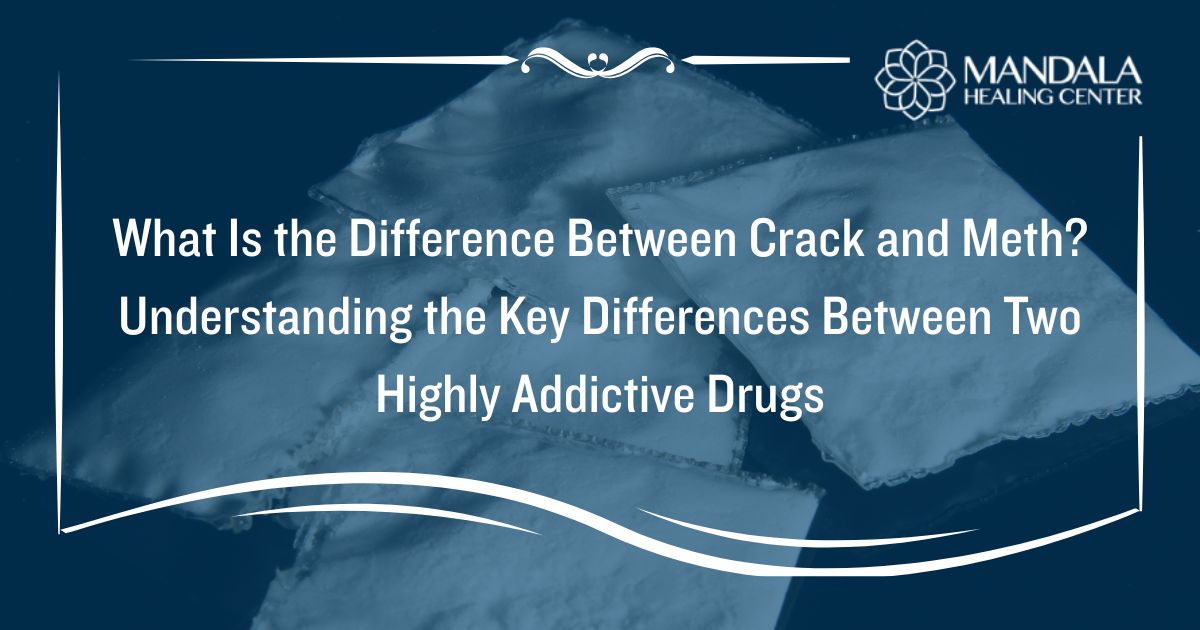
For individuals facing addiction—or those supporting someone who is—understanding the substances involved is a crucial first step. Two of the most commonly abused stimulant drugs are crack cocaine and crystal methamphetamine, often shortened to crack and meth.
While both are highly addictive and pose severe physical, emotional, and mental health risks, they are not the same. They differ in chemical structure, their production process, the effects on the brain and body, and the types of treatment required for recovery.
This guide is designed to clearly explain the key differences between crack vs meth, helping individuals and families make informed decisions about addiction treatment, recovery options, and long-term care.
What Is Crack Cocaine?
Crack cocaine is a smokable form of cocaine, derived from the coca plant, a natural stimulant native to South America. The drug is processed using baking soda and water, then heated to form small, hard rocks. This process eliminates the hydrochloride component found in powder cocaine, making it easier to smoke and leading to a rapid onset of euphoria.
Because of its potency and short duration of effect, crack is associated with intense cravings, frequent re-dosing, and fast-developing crack addiction.
Crack Classification:
- Drug Class: Schedule II Controlled Substance (DEA)
- Route of Use: Smoked
- Typical Onset: 10–15 seconds
- Duration: 5–10 minutes
- Source: Natural (from the coca plant)
What Is Methamphetamine?
Methamphetamine—often referred to as crystal meth or just meth—is a synthetic stimulant drug made from hazardous chemicals in illegal labs. Unlike crack, meth has no natural base. It’s chemically produced using ingredients such as pseudoephedrine (found in cold medications), battery acid, and other toxic substances.
Meth can be smoked, snorted, swallowed in pill form, or injected. Its effects last significantly longer than crack, making it a preferred choice for people seeking prolonged euphoria. However, this extended high comes with extreme consequences to both physical health and mental well-being.
Meth Classification:
- Drug Class: Schedule II Controlled Substance (DEA)
- Route of Use: Smoked, snorted, ingested, injected
- Typical Onset: Immediate (smoked/injected), slower (ingested)
- Duration: 6–16 hours
- Source: Synthetic
How These Drugs Affect the Body and Mind
Mental Health Risks
Both crack and meth disrupt the central nervous system, leading to changes in mood, perception, and behavior. Mental health disorders such as depression, panic attacks, anxiety, and psychotic symptoms often follow prolonged use.
- Meth use is strongly associated with psychological crashes, hallucinations, paranoia, and memory loss.
- Crack cocaine use often leads to intense mood swings, impulsive behaviors, and an inability to regulate emotions.
Physical Health Risks
Both substances lead to life-threatening health problems, especially with long-term use.
- Crack abuse can cause respiratory problems, increased blood pressure, heart attack, and stroke.
- Meth abuse leads to severe dental decay (aka meth mouth), skin sores, tooth decay, gum disease, and even brain damage.
In both cases, users are at high risk for addictive behaviors, withdrawal symptoms, and life-threatening consequences if usage continues unchecked.
Addiction Potential: Is Meth Worse Than Crack?
This question “Is meth worse?” doesn’t have a one-size-fits-all answer. Both are stimulant drugs with a high potential for abuse and addiction. The National Drug Intelligence Center notes that both crack and meth are among the top illicit drugs contributing to emergency room visits and addiction treatment admissions.
However, meth’s longer high and stronger compulsive use patterns may make it harder for some individuals to stop. Additionally, the extended duration of a meth binge often leads to longer withdrawal periods and more significant damage to mental health.
Withdrawal Symptoms: What to Expect
Both crack and meth withdrawals can be intense and, in some cases, dangerous.
Crack Withdrawal May Include:
- Extreme fatigue
- Depression
- Intense cravings
- Anxiety
- Sleep disturbances
Meth Withdrawal May Include:
- Severe depression
- Panic attacks
- Psychosis or hallucinations
- Aggressive behaviors
- Intense hunger or lethargy
Professional help is essential to manage these symptoms safely, especially when mental health problems are involved.
Treatment Options for Crack and Meth Addiction
1. Comprehensive Treatment Programs
Addiction to crack or meth typically requires a multi-layered treatment approach, including:
- Detoxification (medical support during withdrawal)
- Behavioral health counseling (CBT, motivational therapy)
- Mental health treatment for co-occurring disorders
- Family therapy and social support
2. Inpatient or Outpatient Treatment
A variety of addiction treatment centers offer either inpatient (residential) or outpatient treatment options. Inpatient programs provide 24/7 care, while outpatient services enable individuals to balance work or family responsibilities with treatment.
3. Long-Term Recovery and Support
Recovery from stimulant addiction is rarely a linear process. Many individuals require ongoing support, such as:
- 12-step programs or peer recovery groups
- Individual and group therapy
- Relapse prevention planning
- Help addressing underlying trauma.
With the right support system, individuals can break free from addiction and move toward a healthier future.
[elementor-template id=”173075″]
Why Professional Help Matters
Because both meth and crack have severe risks and deeply rooted behavioral and psychological patterns, self-treatment is rarely successful. A risk-free assessment at a licensed treatment center is often the best first step toward recovery.
The Drug Enforcement Administration (DEA) classifies both substances as Schedule II because they have high abuse potential but can be legally prescribed under certain conditions (e.g., traditional meth may be used to treat ADHD under strict supervision). However, the street forms of these drugs—crack and meth—are illegal drugs with no medical value and extreme danger.
While crack and meth differ in origin, form, duration, and use patterns, they share one devastating similarity: both can quickly lead to substance abuse, mental health decline, and life-threatening consequences.
If you or someone you care about is struggling with meth addiction, crack use, or related addictive behaviors, the most crucial step is reaching out for professional help. Addiction treatment isn’t just about stopping drug use—it’s about healing the whole person, restoring mental health, and building a meaningful, long-term recovery plan.
Need Help?
Reach out to the specialists at the Mandala Healing Center today for a risk-free assessment. There is hope. There is help. And there is a way out.
Frequently Asked Questions (FAQs)
1. Can you overdose on crack or meth?
Yes, both crack and meth can cause fatal overdoses. With crack, overdose symptoms may include seizures, a heart attack, or respiratory failure. Meth overdose often involves high body temperature, stroke, or organ failure. Warning signs include chest pain, extreme agitation, hallucinations, and loss of consciousness. Always seek emergency medical attention—every second counts.
2. How are crack and meth detected in drug tests, and how long do they stay in your system?
Both substances are detectable in standard urine tests. Crack (cocaine metabolites) typically remain detectable for 2–4 days, while meth can show up for 3–6 days, depending on use frequency and individual metabolism. Hair follicle tests can detect both for up to 90 days. Factors such as hydration, body fat, and liver function can affect detection windows.
3. Are there medications available to treat crack or meth addiction?
Currently, no FDA-approved medications specifically treat stimulant addiction like there are for opioids or alcohol. However, some medications may help manage symptoms such as depression, anxiety, or sleep issues during recovery. Research is ongoing, and behavioral therapies remain the most effective primary treatment.
4. What should I do if someone I love refuses treatment for crack or meth addiction?
This is a common and painful challenge. Begin by setting boundaries, avoiding enabling behaviors, and seeking support from a therapist or counselor trained in addiction. You can also consult an intervention specialist. Even if the person isn’t ready for help, your education and emotional preparation are key to supporting them when they are.
5. How common is relapse in recovery from crack or meth addiction?
Relapse is a common part of recovery for many individuals with stimulant use disorders. Estimates suggest that 40–60% of people may relapse at some point. However, relapse doesn’t mean failure—it’s often a signal that treatment needs to be adjusted. Ongoing therapy, support networks, and relapse prevention plans help reduce the risk.
6. What role do trauma and mental health play in crack or meth addiction?
Many people struggling with stimulant addiction have underlying trauma or mental health disorders such as PTSD, anxiety, or depression. These issues can both lead to and worsen substance use. Comprehensive treatment programs that address both addiction and mental health together (known as dual diagnosis treatment) are often the most effective path to recovery.
Sources:
- National Institute on Drug Abuse (NIDA): Drugs, Brains, and Behavior: The Science of Addiction
- Drug Enforcement Administration (DEA): Fact Sheets



-

How Much Does a Detox Program in West Palm Beach Cost?
April 28, 2026
-
How Long Do South Florida Rehab Programs Typically Last?
April 21, 2026
-
What Does Freebasing Mean?
April 13, 2026
-
How to Get Florida Medicaid to Pay for Drug & Alcohol Rehab Services
April 10, 2026
-
How Long Does Klonopin Stay in Your System?
April 9, 2026