 Skip to the content

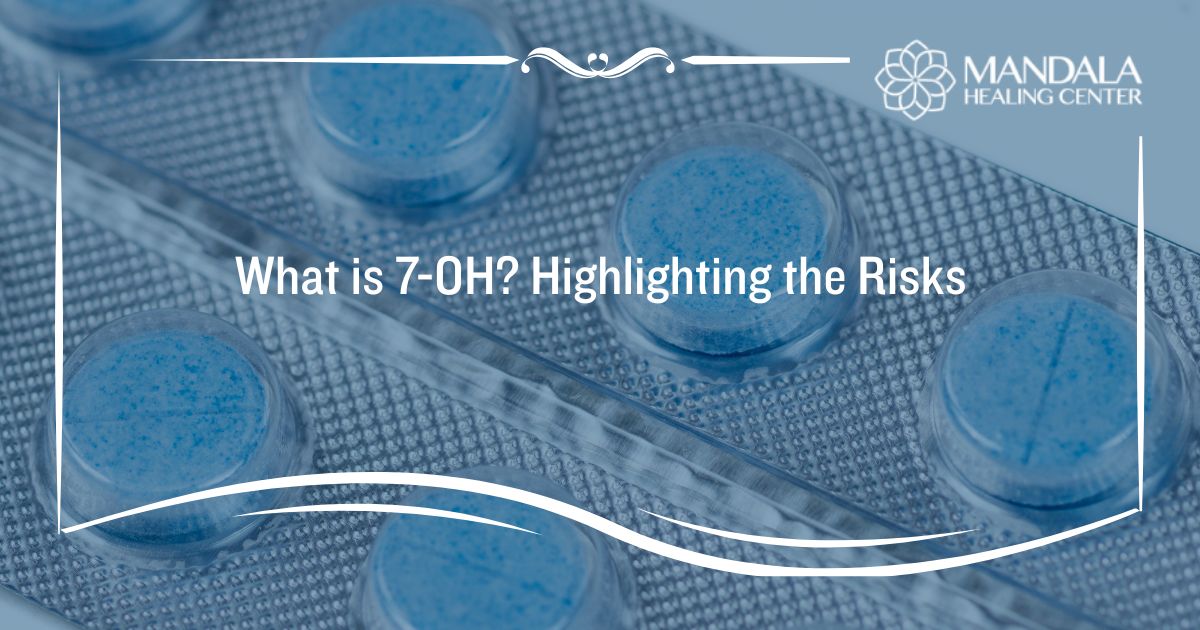
In recent years, the rise of herbal and alternative substances marketed for health and wellness has created a complex and often dangerous grey area for consumers. One compound that raises red flags among toxicologists, healthcare providers, and regulatory agencies alike is 7-hydroxymitragynine—commonly referred to as 7-OH.
Found in certain kratom products, this potent chemical compound has been associated with opioid-like effects, prompting increasing concern due to its high concentrations, lack of regulation, and documented adverse events.
If you or a loved one abuses 7-OH, an addiction treatment center can help you achieve long-term recovery. Get in touch with the addiction experts at Mandala Healing Center for more information on how we can help.
In this article, you will learn:
- What is 7-OH?
- Does 7-OH cause opioid-like effects?
- What are the risks of abusing 7-OH?
- What is the addictive potential of 7-OH?
- Are there safer alternatives to 7-OH?
Understanding 7-OH: What It Is and Where It Comes From
7-OH is a naturally occurring alkaloid derived from the kratom plant (Mitragyna speciosa), a tropical tree indigenous to Southeast Asia.[1] While kratom has traditionally been used in its native regions for pain relief and stimulant effects, its commercial transformation in the West tells a different story.
Modern kratom products—often found in gas stations, smoke shops, or purchased online—have been manipulated to contain concentrated levels of 7-OH. These products containing 7-oh are sometimes sold as dietary supplements, drink mixes, tablets, or other seemingly benign forms. The reality? 7-OH is far more potent than traditional kratom leaf and can activate the same opioid receptors as drugs like morphine.
Opioid-Like Effects Without Oversight
Unlike prescription opioids, 7-OH is not approved by the Food and Drug Administration (FDA) for any medical use. This lack of oversight allows companies to market it under the guise of natural remedies, drawing in unsuspecting consumers looking to treat anxiety, pain, withdrawal symptoms, or other ailments.
Once consumed, 7-OH binds to mu-opioid receptors in the brain, eliciting effects akin to traditional opioid drugs: euphoria, sedation, and, in higher doses, severe respiratory depression.[2] These are the same mechanisms that drive opioid addiction—and yet, products containing 7-OH are often still legally sold.
This loophole presents a major public health concern. According to a 2021 report from the FDA, kratom-related calls to poison centers increased more than 50-fold between 2011 and 2017, with many incidents involving 7-OH or kratom products with unusually high concentrations of active alkaloids.[3]
[elementor-template id=”173075″]
Risk Factors and Health Concerns
The health problems associated with 7-OH are both acute and long-term. Ingestion may cause:
- Nausea and vomiting
- Constipation
- Severe drowsiness
- Respiratory depression
- Hallucinations
- Mood disorders, including anxiety and depression
These symptoms are hazardous when 7-OH is used in combination with other drugs, alcohol, or semi-synthetic opioids. In cases of overdose, emergency responders may need to administer naloxone, a medication that reverses opioid effects, though its efficacy on kratom-related alkaloids can vary.
In 2022, the American Association of Poison Control Centers (AAPCC) reported over 1,800 cases of kratom exposure, with 7-OH often implicated. Of those, nearly 40% required serious medical attention.[4] Several cases resulted in fatal outcomes, particularly when 7-oh products were mixed with other substances.
Why “Natural” Doesn’t Mean “Safe”
It’s tempting to assume that a substance derived from a plant must be proven safe, especially when labeled as a dietary supplement or conventional food. However, the FDA has repeatedly stated that kratom and its derivatives—including 7-OH—are not lawfully added to any food or supplement sold in the U.S.
Moreover, natural remedies are not immune to abuse, addiction, or serious illnesses. In fact, their “natural” status often leads to misuse under the pretense that they’re harmless. This misinformation has prompted multiple health advisory notices from both state and federal agencies, including the FDA and the Centers for Disease Control and Prevention (CDC), urging public education on the real dangers of 7-OH.
The Role of Online Markets and Mislabeling
7-OH often flies under the radar because it is not listed clearly on product labels. Some 7-OH products are mislabeled—or not labeled at all—leaving patients and consumers unaware of what they’re actually ingesting. Without clear regulatory guidance, many companies exploit loopholes in the system.
The rise of online sales further complicates matters. Consumers often purchase 7-OH products with no vetting process, age checks, or medical warnings. These practices increase the likelihood of adverse events, including in young adults or those with pre-existing mood disorders.
Withdrawal, Tolerance, and the Addiction Potential
As with opioids, repeated use of 7-OH can lead to tolerance, dependence, and eventually, withdrawal symptoms. Users trying to quit may face the following kratom withdrawal symptoms:
- Intense cravings
- Restlessness
- Muscle aches
- Insomnia
- Emotional instability
Many turn to 7-OH in attempts to treat opioid withdrawal—a misguided decision that often trades one dependency for another. While some alkaloids in kratom act as partial agonists, the potent action of 7-OH can rival full-strength opioids in terms of addiction potential.
What the FDA and Poison Centers Are Doing
The FDA has not approved kratom or 7-OH for any treatment purpose. In fact, the agency has warned consumers about the dangerous nature of products containing 7-oh, especially those with concentrated levels.
In conjunction, poison centers and public health services are emphasizing the importance of education. If you or someone you know has consumed a suspicious product or is experiencing symptoms of overdose, call the Poison Help Line at 1-800-222-1222 immediately.
Some states have already moved to restrict or ban the sale of kratom and 7-OH-containing products. These legal responses vary widely by jurisdiction, adding to the confusion and risk for consumers.
Safe Alternatives and Responsible Choices
There is currently no approved use for 7-OH in food, drugs, or supplements, and there are safer, evidence-based options available for those seeking help with pain, anxiety, or withdrawal. Healthcare professionals can offer legitimate prescription medications, counseling services, and support programs tailored to your needs.
Self-treating serious illnesses with unregulated substances is a gamble—one that can cost you your health, or worse.
Find Help for 7-OH Abuse and Addiction Today
7-OH may present itself as a “natural” option for treatment or relief, but the reality is far more complex—and far more dangerous. With its opioid-like effects, potential for addiction, and real risk of respiratory depression, this substance should not be taken lightly.
Until stronger regulations are in place and public awareness catches up, the burden of caution lies with the consumer. Know what you’re taking. Read labels—if they exist. And when in doubt, consult a licensed healthcare provider.
If you suspect a product contains 7-OH or you’re concerned about its effects, don’t wait. Call your doctor, reach out to a poison center, and prioritize safety over quick fixes.
If you or a loved one suffers from kratom addiction, it’s time to seek professional help. At the Mandala Healing Center, we can help you overcome 7-OH abuse using evidence-based treatment methods. Contact us today for more information on how to begin your recovery journey.
Frequently Asked Questions (FAQ) About 7-OH
1. How can I identify if a product contains 7-OH if it’s not listed on the label?
Unfortunately, many products do not explicitly list 7-OH even if it’s present. Look for ambiguous ingredients like “kratom extract” or “enhanced mitragynine,” especially in items like capsules, powdered drink mixes, or tinctures. If a product is marketed as having “extra strength” or “fast-acting” kratom, it may be a red flag. Always research the manufacturer and avoid products without transparent sourcing or third-party lab testing.
2. Is it legal to purchase or possess 7-OH in the United States?
The legality of 7-OH is murky. While 7-OH itself is not explicitly scheduled federally, several states have laws banning or restricting kratom and its derivatives. Some jurisdictions treat concentrated kratom alkaloids as controlled substances, even if not federally scheduled. Always check your local and state laws before purchasing or using any product containing kratom or 7-OH.
3. What’s the difference between kratom and 7-OH?
Kratom refers to the raw leaves or powder from the Mitragyna speciosa plant, which contains a mix of alkaloids, primarily mitragynine. 7-OH (7-hydroxymitragynine) is a metabolite of mitragynine and is present in much smaller amounts in natural kratom leaves. However, in many commercial products, 7-OH is artificially amplified to increase potency, making it significantly more dangerous than traditional kratom.
4. Can 7-OH show up on drug tests?
Standard drug panels typically do not test for kratom or its alkaloids. However, specialized testing can detect mitragynine and 7-OH. Employers or legal authorities may request these tests if kratom use is suspected. Due to its action on opioid receptors, prolonged use may raise concerns similar to opioid use during clinical assessments or treatment evaluations.
5. Are there any medical uses for 7-OH currently being studied?
Some researchers have explored kratom alkaloids, including 7-OH, for potential pain relief or use in opioid withdrawal treatment, but no formal clinical trials have proven their safety or efficacy. Due to its high potency and risk profile, most medical bodies discourage its use outside research settings. It remains unapproved for therapeutic use by the FDA.
6. What should I do if I experience side effects after using a product that may contain 7-OH?
Stop using the product immediately and seek medical attention—especially if you experience symptoms like slowed breathing, confusion, or extreme drowsiness. Call your local Poison Help Line (1-800-222-1222) for immediate guidance. If symptoms are severe, do not hesitate to go to the emergency room. Bring the product packaging with you if possible to assist healthcare providers.
References:
- The National Institute on Drug Abuse (NIDA): Kratom
- Frontiers: Understanding Kratom Use: A Guide for Healthcare Providers
- Taylor and Francis Online: Kratom exposures reported to United States poison control centers: 2011–2017
- The Texas Tribune: Kratom poisoning calls climb in Texas as the state fails to enforce ban on synthetic version
Learn more about residential addiction treatment.
Previous in this series: What is 12 Step Facilitation Therapy · Next: What is a Collapsed Vein

-

Does Insurance Cover Drug and Alcohol Rehab in Florida?
October 13, 2026
-

Signs Your Drinking May Be Becoming a Problem
October 8, 2026
-

How to Get Into Rehab Quickly in Florida
September 30, 2026
-

Can You Go to Rehab Without Detoxing First?
September 24, 2026
-

Can You Become Addicted to Alcohol Without Drinking Every Day?
September 19, 2026