 Skip to the content

Structure, therapy, and community are what recovery requires. Our inpatient rehab in West Palm Beach provides all three.
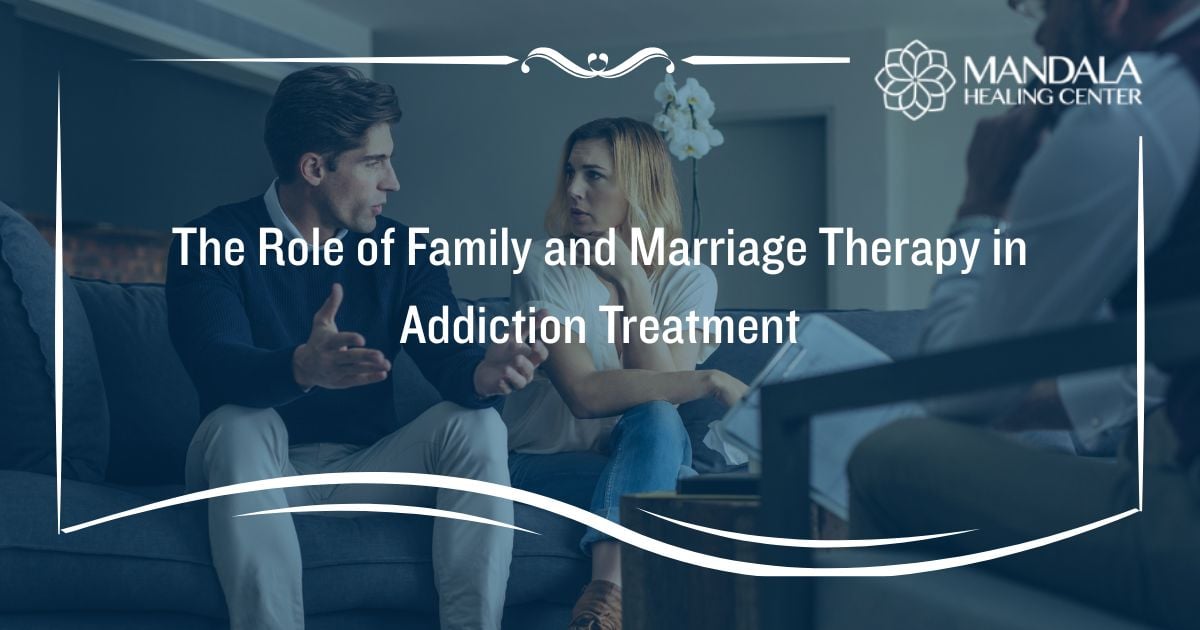
When someone battles addiction—whether to alcohol, drugs, or other substances—the impact ripples far beyond that individual. Addiction treatment often focuses on the person with the substance use disorder, but healing truly thrives when family members, spouses, and the entire family system are involved. Family and marriage therapy in addiction treatment isn’t just a helpful add‑on—it’s often central to sustainable addiction recovery.
During most addiction treatment programs, you’ll have the ability to partake in family therapy. Family therapy plays a crucial role in addiction treatment because it addresses the ways family dynamics, communication patterns, and unresolved conflicts can contribute to substance use disorders. By involving family members in the recovery process, therapy not only helps repair strained relationships but also creates a supportive environment that can positively reinforce sobriety and reduce the risk of relapse.
In this article, you will learn:
- How your family is connected to addiction recovery
- What types of family therapy are used in addiction treatment
- How family therapy benefits individual treatment
The Interplay of Addiction, Family, and Healing
Research shows that family dynamics, patterns of communication skills, roles within the family system, and underlying relationship dysfunction can fuel addictive behaviors or contribute to increased problematic substance use. Conversely, they can also powerfully support recovery when addressed by skilled professionals.
Key statistics on the effectiveness of family therapy for addiction include:[1,2.3]
- According to the Substance Abuse and Mental Health Services Administration (SAMHSA), family‑involved treatment improves outcomes such as abstinence and reduced substance use.
- Randomized clinical trials of behavioral couples therapy (BCT) show that involving a partner in treatment leads to fewer relapse events and better relationship satisfaction, compared to individual therapy alone.
- Functional Family Therapy (FFT) and solution-focused brief therapy (SFBT) in adolescent substance misuse cases lead to lower substance use and better family functioning.
Types of Family-Centered Approaches in Addiction Treatment
1. Family Therapy
This broad category focuses on family interactions, communication skills, and shared roles. The family therapist explores how family life and roles influence addiction and recovery.
Key benefits of family therapy include:
- Helps resolve conflicts fueling substance misuse.
Enhances coping skills among many family members, not just the individual with active addiction. - Encourages positive behaviors and the ability to positively reinforce sobriety across the family system.
2. Behavioral Couples Therapy (BCT)
Behavioral couples therapy (BCT) focuses on one or both partners. It combines substance abuse treatment goals with couples counseling, aiming to reward abstinence and reduce relationship distress.
BCT is effective because:[4]
- Randomized clinical trials consistently show reduced substance use and improved relationship functioning.
- Including the partner helps anchor recovery in the relationship, reducing chances of relapse.
- It also addresses issues like intimate partner violence and extensive relationship problems in a structured way.
3. Functional Family Therapy (FFT)
Often used with teens and young adults, FFT focuses on correcting risk factors and improving family functioning. This therapy reduces problematic substance use in adolescents and builds resilience through improved family support. It also boosts parenting skills and enhances children’s psychosocial adjustment.
4. Solution-Focused Brief Therapy (SFBT)
SFBT targets change quickly by focusing on goals and strengths, not deficits. Solution-focused brief therapy empowers families to craft a recovery contract or shared vision for sobriety, targets painful emotions with solution-based actions, and offers a streamlined, goal-driven path, especially within substance abuse treatment programs.
[elementor-template id=”173075″]
How These Therapies Complement Individual Treatment
While individual counseling or therapy is important—and remains a critical piece of a treatment plan—it can fall short if underlying family dynamics go unaddressed.
Blending family or couples therapy with individual therapy often leads to:
- Stronger engagement in the recovery process.
- Better ability to handle relapse triggers, because coping skills are woven into the family’s day-to-day fabric.
- More durable change, as the family learns to support recovery, resolve conflicts, and foster positive reinforcement of abstinence.
Practical Strategies for Families and Therapists
Families should:
- Engage in family counseling early—don’t wait until relapse occurs.
- Develop a recovery contract, establishing shared goals and how each person can positively reinforce sobriety.
- Work on communication skills and conflict resolution to strengthen bonds and reduce relationship dysfunction.
On the other hand, your therapist must be:
- Combining individual therapy with behavioral couples therapy or family therapy techniques for a holistic approach.
- Using solution‑focused brief therapy to help families quickly shift toward recovery-oriented action.
- Addressing deeper issues like intimate partner violence or domestic violence when they intersect with substance misuse.
Family therapy is highly effective in addiction treatment because it doesn’t just focus on the individual—it addresses the entire family system. Improving communication skills, repairing strained relationships, and teaching families how to support recovery without enabling addictive behaviors creates a stronger, more stable foundation that significantly reduces the risk of relapse.
The Bottom Line: Healing the Whole Family
Addiction rarely operates in isolation. It reshapes family relationships, creates waves of relational dysfunction, and often hides behind unspoken tensions. That’s why family and marriage therapy in addiction treatment is vital—it targets the family system, not just the individual with addictive behaviors.
This integrated approach helps families:
- Understand how past substance abuse patterns still affect current dynamics.
- Build healthier, more resilient relationships.
- Create sustainable recovery environments for each member, especially children.
By weaving family therapy, behavioral couples therapy, functional family therapy, and solution‑focused brief therapy into substance abuse treatment programs, clinicians and families together foster a stronger, more supportive path to recovery—one that addresses both the addiction and the relationships it’s intertwined with.
Get Connected to Family Therapy in an Addiction Treatment Program
Starting the journey toward recovery can feel overwhelming, but you don’t have to face it alone. Family therapy integrated into addiction treatment programs provides the tools and guidance needed to rebuild trust, improve communication, and strengthen family relationships strained by substance misuse. Whether you’re seeking help for yourself or supporting a loved one, working with a qualified family therapist ensures that the entire family has a role in the healing process.
At Mandala Healing Center, we understand the impact addiction has on both individuals and their families. Our specialized programs include evidence-based family therapy techniques that address the root causes of substance use disorders while fostering a supportive environment for long-term recovery.
If you’re ready to rebuild your relationships and create a healthier future, contact the Mandala Healing Center today to begin treatment and take the first step toward lasting healing for you and your loved ones.
Frequently Asked Questions (FAQ)
1. Can family therapy help if my loved one isn’t ready for addiction treatment yet?
Yes. Even if the person struggling with substance use hasn’t agreed to treatment, family therapy can help other family members build healthier communication skills, set boundaries, and reduce enabling behaviors. This creates a more supportive environment, which can often motivate the individual to seek help.
2. How is family therapy different from couples counseling in addiction recovery?
Family therapy focuses on the entire family system, including parents, siblings, and children, addressing broader family dynamics and shared responsibilities. Couples counseling or behavioral couples therapy is designed specifically for partners and works to improve relationship functioning, foster relationship satisfaction, and create recovery-focused agreements like a recovery contract.
3. Does family involvement really reduce relapse rates?
Research shows that involving family members in substance abuse treatment improves long-term recovery outcomes. Families learn how to positively reinforce sober behaviors, identify risk factors, and resolve conflicts—helping the individual maintain progress even after completing treatment.
4. What if there’s domestic violence or severe relationship dysfunction?
When intimate partner violence or domestic violence is present, therapy must be approached cautiously. Therapists often recommend individual counseling alongside specialized behavior therapy or resources that ensure safety first, before engaging in any shared sessions. Addressing safety is always the top priority.
5. Can children benefit from family therapy even if they aren’t the ones struggling?
Absolutely. Children are deeply impacted by substance misuse within the household, even if they’re not directly involved. Family counseling can improve their psychosocial adjustment, strengthen coping skills, and reduce the long-term emotional toll of growing up around addictive behaviors.
References:
- The Substance Abuse and Mental Health Services Administration (SAMHSA): THE IMPORTANCE OF FAMILY THERAPY IN SUBSTANCE USE DISORDER TREATMENT
- APA PsycNet: A randomized clinical trial of behavioral couples therapy versus individually based treatment for women with alcohol dependence.
- Taylor and Francis Online: Effectiveness of solution-focused brief therapy: An umbrella review of systematic reviews and meta-analyses
- The National Library of Medicine (NLM): Behavioral Couples Therapy for Substance Abuse: Rationale, Methods, and Findings
Previous in this series: The Role of Art Therapy in Addiction Recovery · Next in this series: Treatment for Amphetamine Addiction in Florida
Learn more about residential addiction treatment.
Previous in this series: The Role of Aftercare in Transitioning Away From Inpatient Rehab · Next: Treatment for Amphetamine Addiction in Florida


-

Does Insurance Cover Drug and Alcohol Rehab in Florida?
October 13, 2026
-

Signs Your Drinking May Be Becoming a Problem
October 8, 2026
-

How to Get Into Rehab Quickly in Florida
September 30, 2026
-

Can You Go to Rehab Without Detoxing First?
September 24, 2026
-
Can You Become Addicted to Alcohol Without Drinking Every Day?
September 19, 2026