 Skip to the content

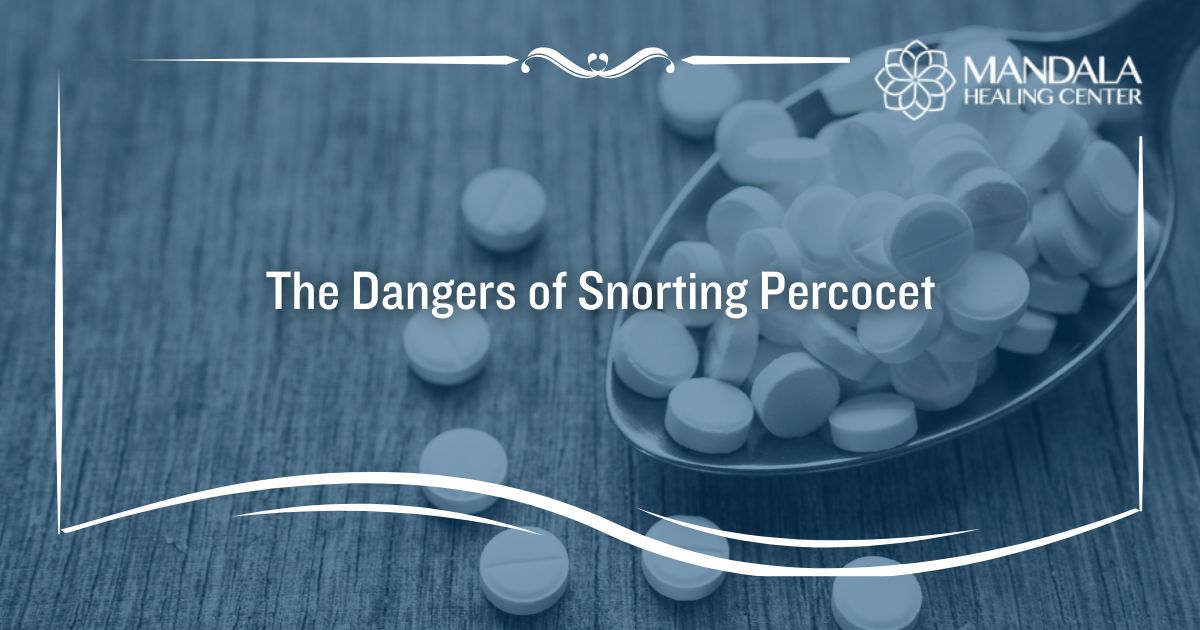
The Dangers of Snorting Percocet
Percocet is a commonly prescribed medication used to manage severe pain. It combines oxycodone, a powerful opioid, with acetaminophen. When taken as prescribed in pill form, it can provide effective pain relief. But when misused—especially by snorting Percocet—the risks increase dramatically. Understanding the dangers of snorting Percocet is essential for anyone struggling with substance abuse or concerned about a loved one.
This article explains how Percocet affects the body, why people misuse it, and the serious health risks tied to snorting oxycodone. If you or a loved one needs addiction treatment or recovery support, find comprehensive care at the Mandala Healing Center.
What Is Percocet and How Does It Work?
Percocet belongs to the opioid drug class, a group of prescription opioids used to treat moderate to severe pain. The active opioid ingredient, opioid oxycodone, works by binding to opioid receptors in the brain. These receptors are part of the central nervous system and control how the body experiences pain. When taken as prescribed, Percocet can reduce discomfort and improve quality of life for those dealing with chronic pain or recovering from injury.
However, like many prescription medications, it also carries a high risk for misuse and addiction. Because of this, the Drug Enforcement Administration closely monitors how opioids are prescribed and distributed.
Why Do People Snort Percocet?
People snort Percocet to intensify its effects. Crushing the pill form and inhaling it through the nasal passages allows the drug to enter the bloodstream faster than swallowing it. This can produce stronger, faster “desired effects,” including euphoria.
However, this method bypasses the body’s natural filtering systems and dramatically increases the risk of harm. Snorting Percocet is a form of drug abuse and is a clear sign of opioid misuse. Over time, this behavior can lead to opioid dependence, Percocet addiction, and eventually opioid use disorder.
The Immediate Dangers of Snorting Percocet
Long-term Percocet abuse can have serious risks. However, Percocet abuse of any kind is immediately dangerous. Here are some of the most significant risks of snorting Percocet.
Respiratory Depression
One of the most life-threatening effects of opioid misuse is respiratory depression. This occurs when breathing slows or stops altogether. Because opioids suppress the central nervous system, taking too much—especially through snorting—can lead to fatal outcomes.
The risk of overdose increases significantly when the drug is absorbed rapidly, as happens when snorting oxycodone.
Increased Risk of Overdose
Snorting Percocet raises the risk of overdose because it delivers a higher concentration of the drug quickly. This makes it harder to control dosage.
An oxycodone overdose or Percocet overdose can cause:
- Slow or stopped breathing
- Loss of consciousness
- Blue lips or fingertips
- Death
Even small increases in dosage can have dangerous effects, especially when mixed with other substances or other drugs.
Damage to Nasal Passages
Snorting drugs can cause severe damage to the nasal passages and nasal septum. Over time, this can lead to:
- Chronic nosebleeds
- Sinus infections
- Nasal damage or collapse
- Difficulty breathing
This type of damage is often permanent and may require medical intervention.
Long-Term Health Risks
The dangers of snorting Percocet go far beyond immediate effects. Long-term use can lead to serious health problems that affect nearly every system in the body.
Here are some of the long-term dangers associated with Percocet abuse.
Physical Dependence and Addiction
Repeated use changes how the brain functions. The body begins to rely on the drug to feel normal, leading to physical dependence. Over time, this can develop into full opioid addiction.
Percocet addiction can take hold quickly, especially when the drug is misused. People may find themselves needing more Percocet to achieve the same effects, increasing both tolerance and risk.
Opioid Use Disorder
Chronic misuse can lead to opioid use disorder, a medical condition marked by compulsive drug use despite negative consequences. This condition affects both physical and mental health and often requires professional addiction treatment.
Mental Health Effects
Substance use and mental health are closely linked. Long-term Percocet abuse can worsen anxiety, depression, and other mental health needs. Many people begin using opioids for pain but continue using them to cope with emotional distress. This creates a cycle that is difficult to break without support.
Opioid Withdrawal Symptoms
When someone who is physically dependent stops using Percocet, they may experience withdrawal symptoms. These symptoms can vary depending on the level of opioid dependence and duration of use.
Common opioid withdrawal symptoms include:
- Muscle aches
- Nausea and vomiting
- Sweating
- Anxiety or agitation
- Insomnia
- Strong cravings
Withdrawal symptoms are often uncomfortable and can drive continued drug abuse. This is why medical supervision is recommended during detox.
Why Snorting Increases the Risk
The dangers of snorting go beyond faster absorption. This method disrupts the body’s processing of the drug, making it more unpredictable.
Snorting Percocet:
- Delivers the drug directly into the bloodstream
- Increases intensity of effects
- Raises the risk of overdose
- Causes nasal damage
- Encourages repeated misuse
Because the effects are stronger, people are more likely to continue the behavior, increasing the risk of addiction and overdose.
Mixing Percocet With Other Substances
Using Percocet alongside other substances—such as alcohol or other medications—raises the danger even further.
Combining opioids with other drugs that depress the central nervous system can lead to:
- Extreme sedation
- Respiratory failure
- Death
Many opioid overdose cases involve multiple substances, highlighting the importance of understanding these risks.
Treatment Options for Percocet Addiction
Recovery is possible, and many effective treatment options are available. Addressing both the physical and emotional aspects of addiction is key to lasting recovery.
Here are some of the treatment options for Percocet addiction.
Medication-Assisted Treatment
Medication-assisted treatment (MAT) is one of the most effective approaches for opioid addiction treatment. It uses FDA-approved medications to reduce cravings and withdrawal symptoms. These medications help stabilize brain chemistry and allow individuals to focus on recovery.
Counseling and Therapy
Counseling sessions play a crucial role in addiction medicine. Therapy helps individuals understand the root causes of substance use and develop healthier coping strategies. Both individual therapy and group support groups can provide guidance and encouragement.
Outpatient Treatment
Outpatient treatment programs allow individuals to receive care while continuing daily responsibilities. This can be a flexible option for those with strong support systems.
Support Systems
Support groups and family involvement can make a significant difference. Having a loved one involved in the recovery process often improves outcomes and helps prevent relapse.
Effective addiction treatment must also address mental health needs. Many people struggling with substance use disorder also experience depression, anxiety, or trauma. Integrated care that treats both addiction and mental health leads to better long-term recovery outcomes.
Preventing Relapse
Recovery does not end after initial treatment. Ongoing support is essential to avoid relapse.
Strategies to maintain recovery include:
- Continuing therapy
- Attending support groups
- Avoiding triggers
- Building healthy routines
If you or a loved one is struggling with Percocet abuse, it is important to seek help as soon as possible.
Signs that professional help may be needed include:
- Using more Percocet than prescribed
- Snorting oxycodone or altering the drug
- Experiencing withdrawal symptoms
- Difficulty stopping use
- Declining physical or mental health
Addiction is a medical condition, not a failure. With the right support and treatment, recovery is achievable.
A Path Toward Lasting Recovery
The dangers of snorting Percocet are serious and often underestimated. From respiratory depression to nasal damage and increased risk of overdose, the consequences can be life-threatening.
But there is hope. Through comprehensive addiction treatment, including medication-assisted treatment, counseling, and support, individuals can overcome addiction and rebuild their lives.
If you or someone you care about is struggling, find comprehensive addiction treatment or recovery support at the Mandala Healing Center. Explore our programs, verify your insurance, or schedule an intake appointment by contacting our admissions team today.
Frequently Asked Questions
1. Can snorting Percocet make addiction develop faster?
Yes. Snorting Percocet delivers the drug to the brain more quickly, which can reinforce repeated use. This rapid effect increases the likelihood of developing opioid dependence and accelerates the progression to opioid use disorder compared to taking it as prescribed.
2. How does Percocet affect the brain over time?
Long-term use of opioids like oxycodone changes how the brain processes pain, reward, and decision-making. The brain becomes less responsive to natural rewards and more reliant on the drug, making it harder to function without it and increasing the risk of addiction.
3. Is it possible to overdose on Percocet even if it was prescribed?
Yes. Even when prescribed, taking higher doses than directed, using it more frequently, or combining it with other medications or substances can lead to an opioid overdose. Tolerance levels vary, so what seems like a small increase can still be dangerous.
4. What are early warning signs of Percocet misuse?
Some early signs include taking the medication differently than prescribed, strong cravings, using it for reasons other than pain relief, and seeking more Percocet before a prescription runs out. Behavioral changes, such as secrecy or withdrawal from daily activities, may also appear.
5. Are there safer alternatives for managing pain?
Yes. Depending on the situation, doctors may recommend non-opioid prescription medications, physical therapy, lifestyle changes, or other medications. Pain management plans can vary depending on the individual and should be discussed with a healthcare provider.
6. What should I do if someone I know is struggling with Percocet abuse?
Start by approaching the person with empathy and without judgment. Encourage them to seek professional help and offer to support them in finding treatment options. In cases where there is a risk of overdose, immediate medical attention is critical.
Sources
- NIDA: Prescription Opioids
- DEA: Synthetic Opioids Fact Sheet
- HHS: Prevent Opioid Abuse and Addiction
- Mayo Clinic: Oxycodone and Acetaminophen (Oral Route)
Learn more about oxycodone addiction treatment.
Previous in this series: Percocet Withdrawal Timeline · Next: Where to Find an Oxycodone Rehab Center in West Palm Beach




-

Signs Your Drinking May Be Becoming a Problem
October 8, 2026
-

How to Get Into Rehab Quickly in Florida
September 30, 2026
-

Can You Go to Rehab Without Detoxing First?
September 24, 2026
-

Can You Become Addicted to Alcohol Without Drinking Every Day?
September 19, 2026
-

Inpatient vs. Outpatient Rehab: Which One Is Right for You?
September 14, 2026